The Story Behind This Image
A Winter Night Wrapped in Thread and Fire
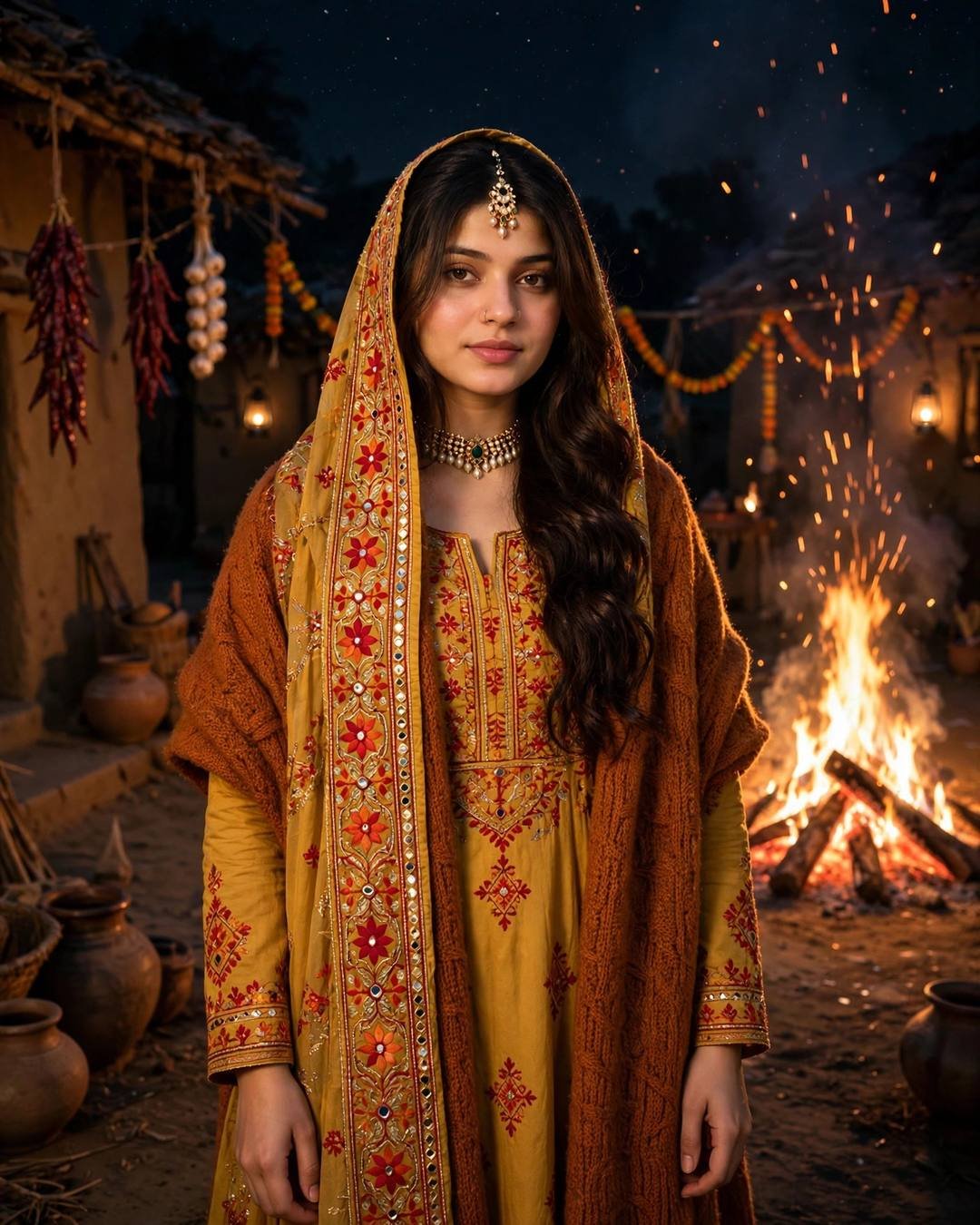
The bonfire has just been lit in the village courtyard, and she stands close enough to feel its breath on her cheeks. Her mustard suit glows in the firelight, the phulkari embroidery across the dupatta catching every spark — red and crimson threadwork blooming like the flowers of the folk songs her grandmother sang at Lohri. A warm rust shawl is drawn over her shoulders, its knit texture a quiet counterpoint to the silk-thread precision of the dupatta.
She wears a maang tikka and a pearl choker with a green stone at its heart — pieces she didn't need, but chose, because Lohri is a night for showing up fully. Behind her, dried chillies and garlic hang from the courtyard eaves, clay pots line the earthen floor, and marigold strings sway above a second lantern.
The Craft Behind the Look
Phulkari, meaning "flower work", is Punjab's own embroidery — and this dupatta wears it the traditional way, mirror and thread scattered dense as constellations. The shawl keeps the palette honest: mustard, rust, crimson — harvest colours.
Why This Frame Lingers
There is no performance here. Just a woman, a fire, and a festival that has marked the turning of winter for generations. The sparks rise, the night holds its breath, and the camera keeps both.
- Pose: Standing tall before the bonfire, hands relaxed at her sides, chin lifted into the firelight
- Photography: Night portrait with firelight as the key light, stars and lanterns in soft bokeh
- Mood: Warm, folk, celebratory — winter at its most golden