The Story Behind This Image
The Scar, Tailored
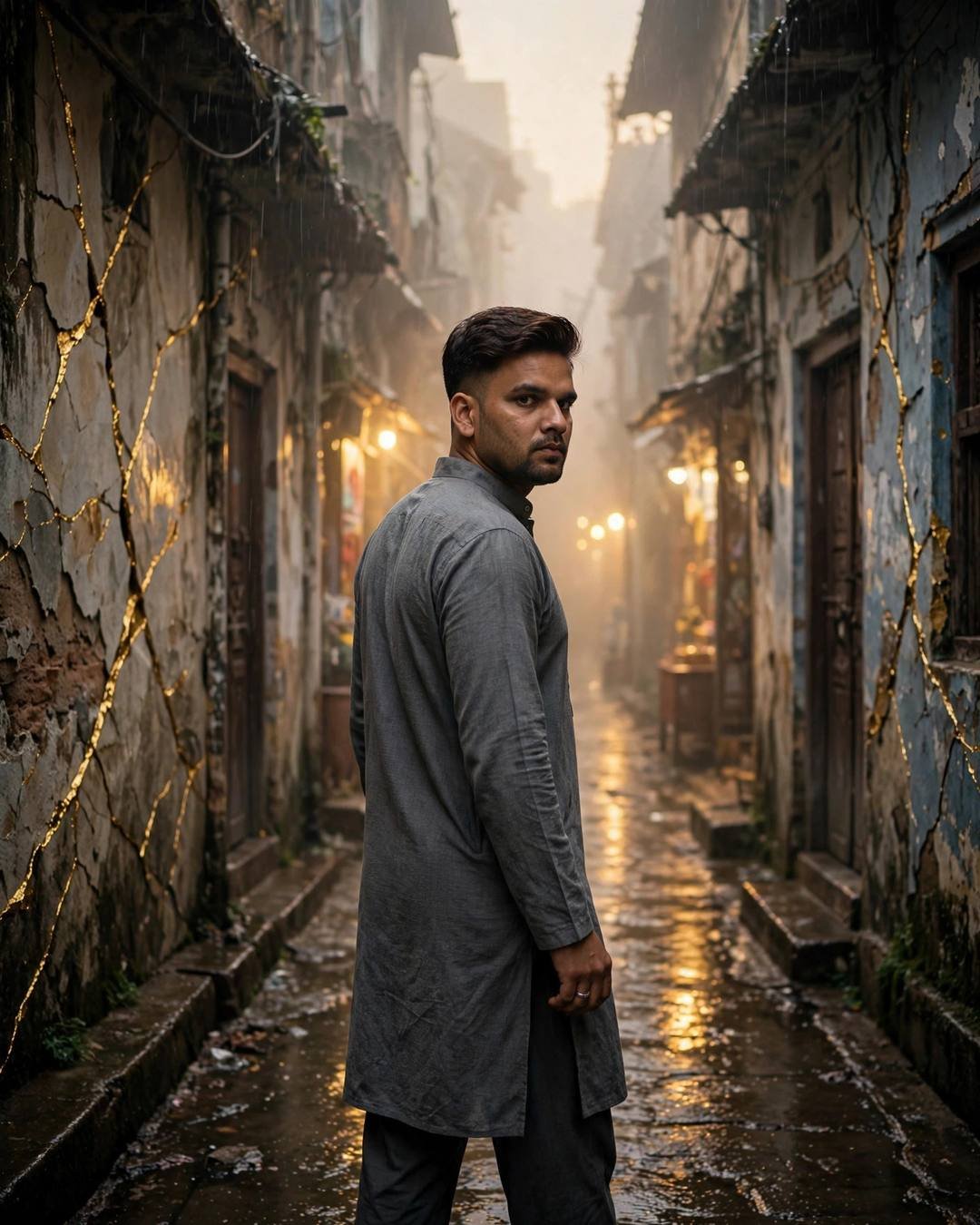
Wearing the scar like a tailored suit — the title is the whole of the broken-but-strong philosophy in eight words. He walks away from the camera down a narrow old-city lane with peeling walls, in a grey kurta and dark pajama, neatly combed side part — and looks back over his shoulder, straight at us. The walls on both sides have cracked, and the cracks are filled with gold, kintsugi veins catching the golden-hour light through dense fog. The scar is not hidden. It is the best-dressed thing in the frame.
Aching, Walking Away
Aching is the honest register for looking back. The lane glows with rain-diffused warmth, the fog softens everything except his gaze, and the posture says the complicated thing: I am leaving, and I am not pretending it did not happen. The gold in the walls is the lane's own history of breaking and mending — old cities are nothing but scars that learned architecture.
What Looking Back Means
It does not mean going back. That is the distinction the photograph insists on. The look is inventory, not longing — a final check that the past is where it was left, gold-filled and glowing, before the walk continues. The fog ahead is blank. The gold behind is finished. He walks on.
- Pose: Walking away, looking back over the shoulder — inventory, not longing.
- Photography: Vertical 4:5 portrait, golden hour through dense fog, gold wall-veins glowing.
- Mood: Aching — the scar worn well, the past left glowing, the walk continuing.