The Story Behind This Image
Where the Road Runs Out of Light
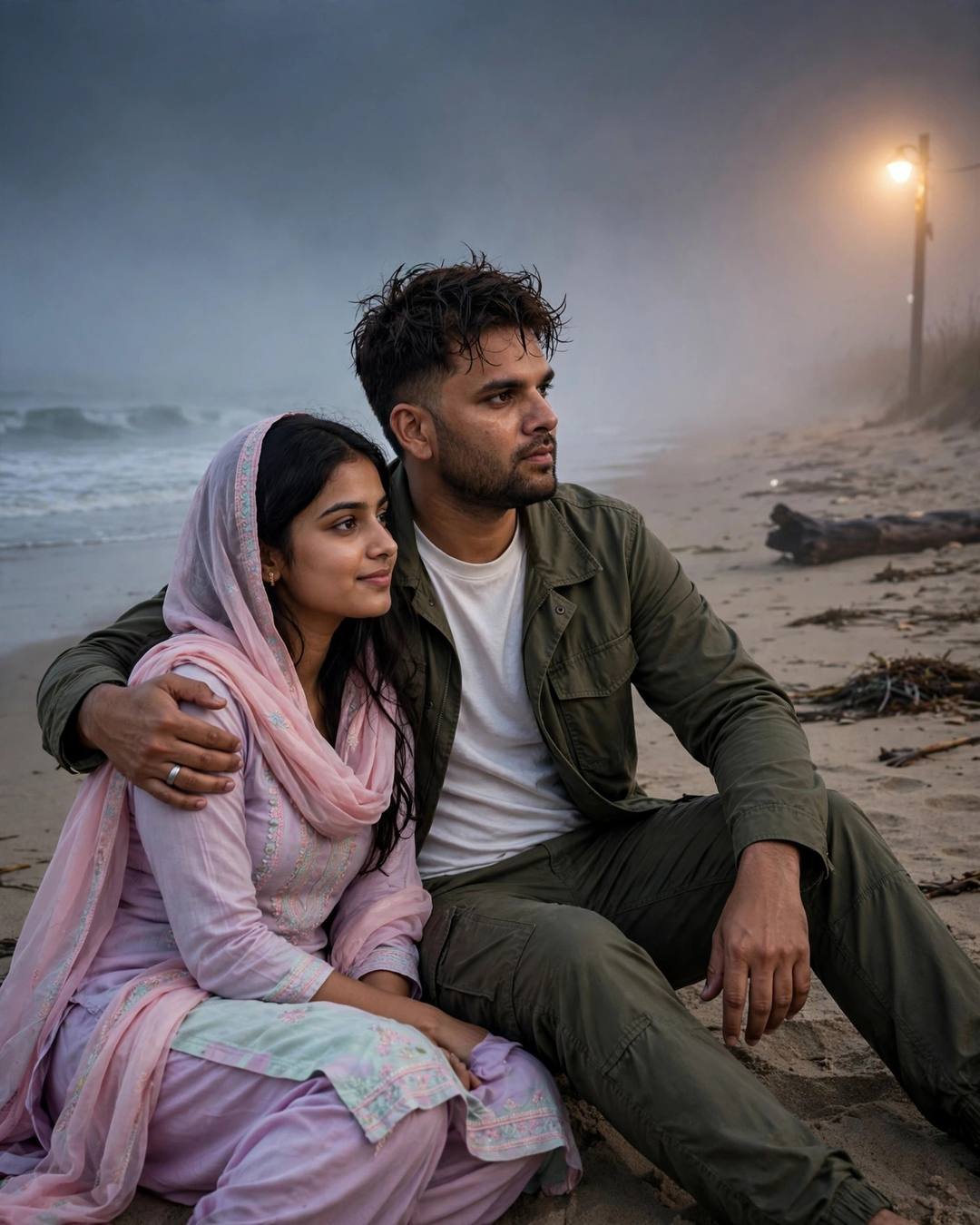
There is an hour when the sea and the sky can't decide which is colder, and everything wraps in fog. On a deserted beach, a couple sits on damp sand watching waves break white through the mist. His arm rests around her shoulders, steady and protective. A lone streetlamp burns sodium-orange behind them, its glow diffusing like a halo. She wears a pastel salwar-kameez, dupatta drawn over her head; he wears an olive field jacket over a white tee and cargo pants, hair wind-tousled. Nobody else exists for miles.
Sodium Light Against the Fog
The frame lives on a single warm note: that amber streetlamp against blue-grey fog. Its light catches the edges of her dupatta, gilds the wave foam, and pools in the wet sand. Everything else falls away into softness — the shoreline dissolving, the horizon erased. It is the light cinematographers chase: one practical source, endless atmosphere, and the suggestion that something electric is about to be said.
An Electric Quiet
They are not looking at each other; they are looking at the same vanishing point, and that shared gaze says more than dialogue. Her face is calm, almost smiling; his is thoughtful, scanning the fog. His hand rests relaxed on her shoulder, his other hand empty on his knee — nothing held, nothing hidden. This is the electric mood of a film's turning point: the calm where the audience leans forward.
- Pose: Sitting close on the sand, his arm around her shoulders, both gazing out at the foggy waves.
- Photography: Vertical 4:5 cinematic frame, fog-softened background, warm streetlamp glow against cool blue tones.
- Mood: Electric — straight out of a film, a charged stillness before the story turns.