The Story Behind This Image
Grief Has No Curfew
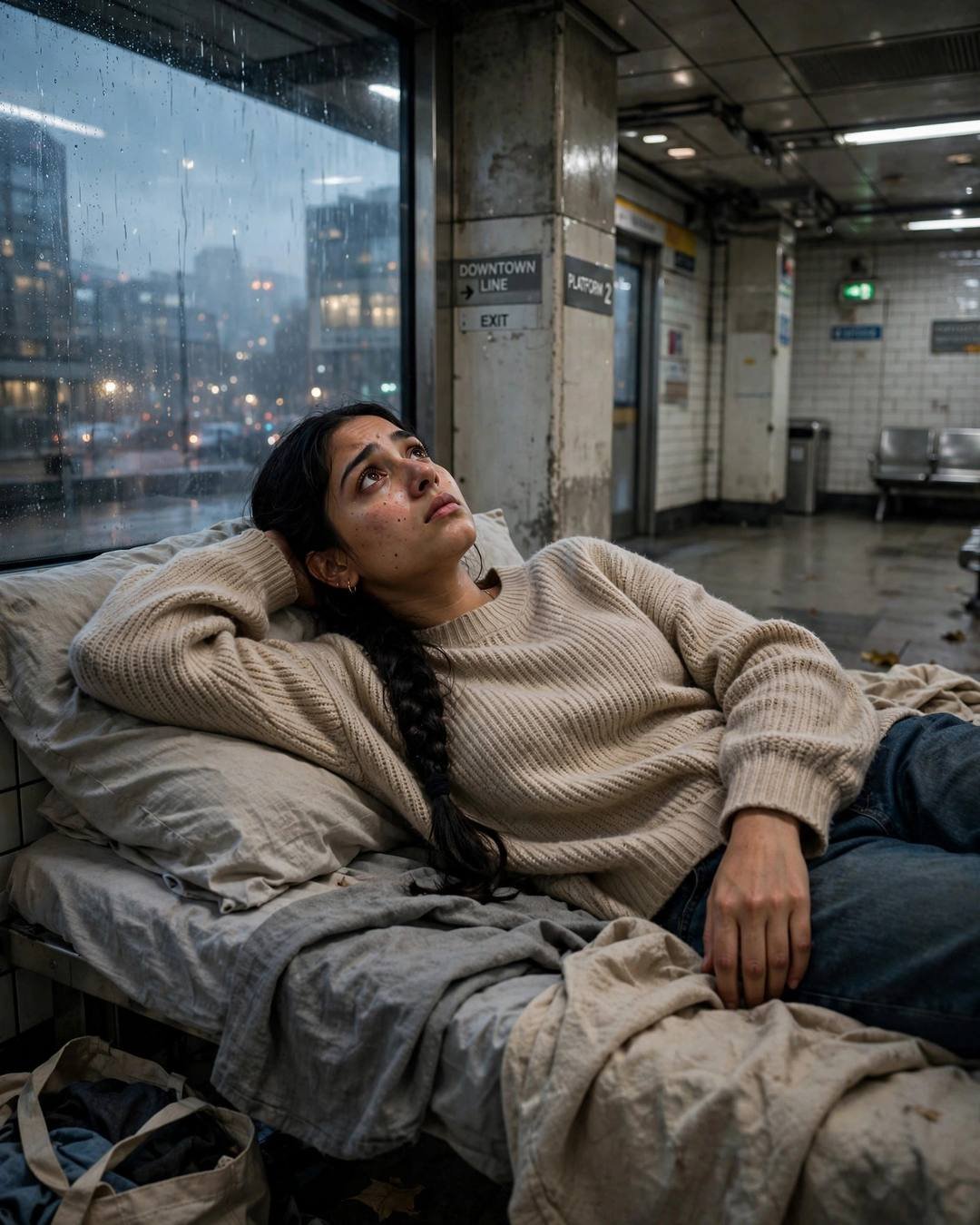
A bed sits in the middle of a midnight metro station, and she is lying on it — one arm tucked behind her head, eyes fixed on the ceiling she cannot see, a long braid spilling over one shoulder. Rain streaks the tall windows; the city glows and blurs beyond the glass. Platform signs read DOWNTOWN LINE, EXIT, PLATFORM 2. Nobody is coming. Nobody is going. It is just her, the hum of fluorescent lights, and the particular loneliness of 2 a.m.
She laughed too hard at a comedy show tonight. That is the cruel detail. For two hours she forgot, genuinely forgot, and laughed until her stomach hurt — and then the show ended, the lights came up, and the forgetting ended with it. Grief ambushed her in the lobby like it had been waiting outside the whole time.
The Fragile Hour
This photograph understands that heartbreak does not live in the dramatic moments; it lives in the empty ones. The bed in the station is absurd and perfect — sleep dragged into a public place, because private grief felt too small a room for it tonight. Her face holds no tears, just the wide-eyed stare of someone replaying the evening: the joke that made her laugh, the laugh that made her remember, the remembering that made the night unbearable.
The city outside keeps glowing, indifferent and beautiful. She watches it the way you watch a film you have already seen — knowing the ending, sitting through it anyway.
- Pose: Lying on her back, one arm behind her head, other resting on her hip, gaze fixed upward.
- Photography: Vertical 4:5 portrait, rain-diffused city glow through tall windows, cold fluorescent interior light.
- Mood: Grief and letting go, fragile — the hollow hour after the laughter stops.